Categoria: PL/SQL
-

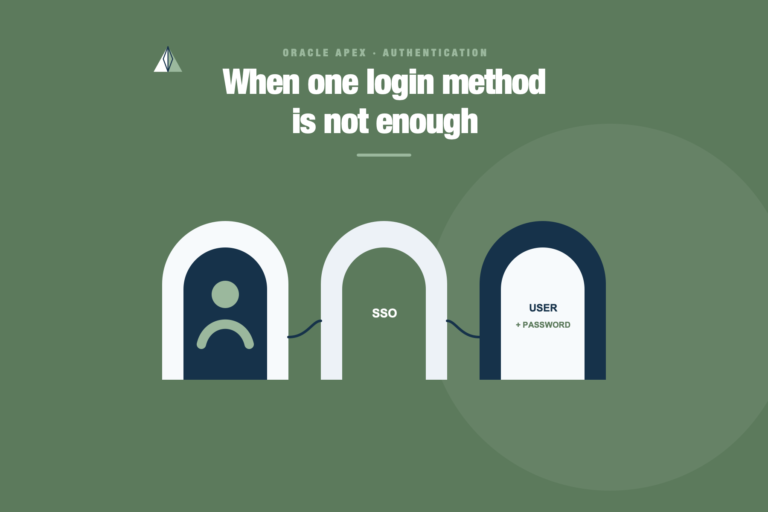
When one login method is not enough
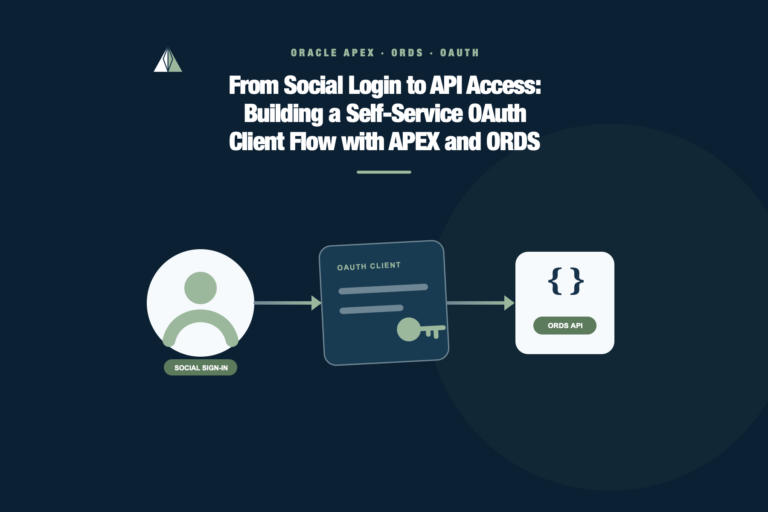
In the first version of this case, I deliberately kept things focused. The goal was to prove that a user could come in through Google, complete a minimal onboarding flow, receive ORDS client credentials, and actually use those credentials against a protected endpoint. That loop, once it closes, already carries a lot of value, and
-

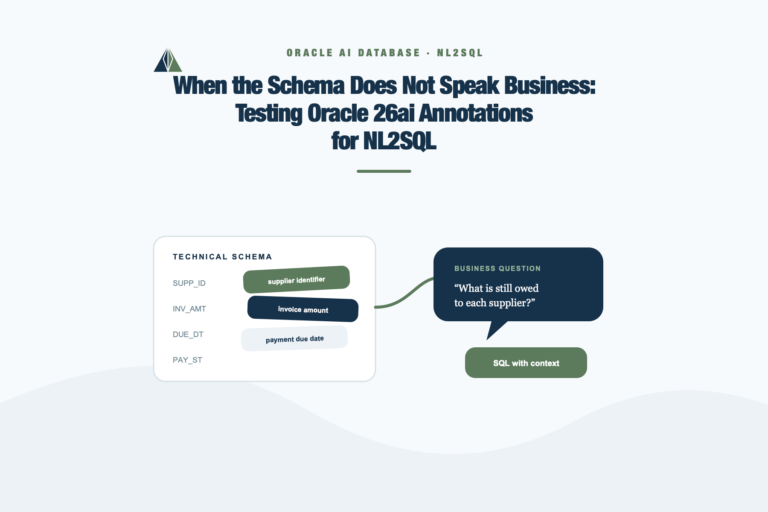
When the Schema Does Not Speak Business: Testing Oracle 26ai Annotations for NL2SQL
A practical from-the-field test showing how Oracle 26ai annotations can reduce NL2SQL ambiguity by giving the database the business context that object names alone never carried.
-

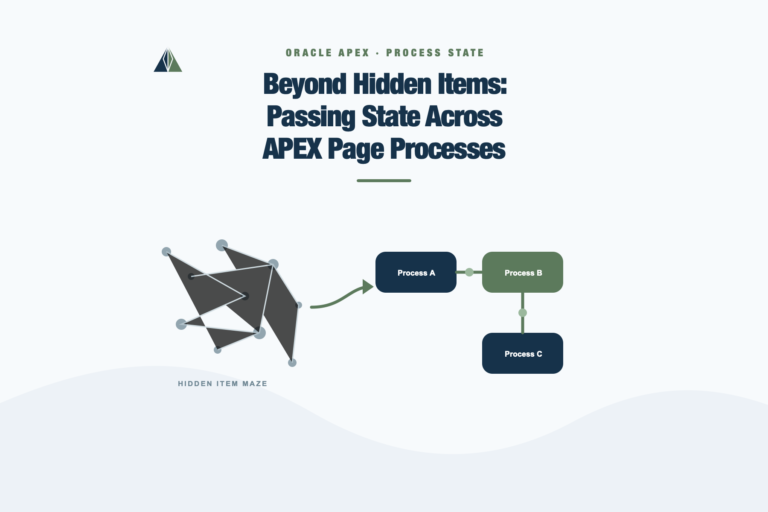
Beyond Hidden Items: Passing State Across APEX Page Processes
By Dênio Flávio Garcia da Silva I’ve spent a lot of time auditing APEX environments, and nothing sinalizes a maintenance nightmare quite like the “Hidden Item Explosion.” We’ve all been there: a simple form grows, logic accumulates, and suddenly you’re juggling dozens of values across multiple processes. It works, sure, but would you trust your future self
-

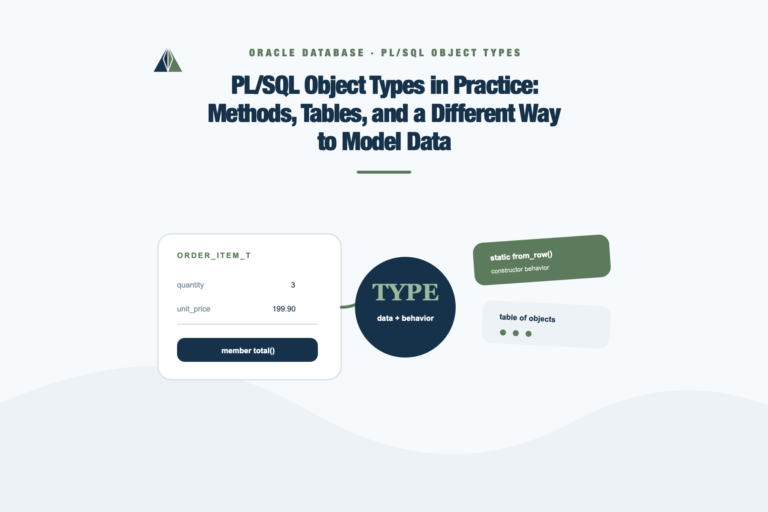
PL/SQL Object Types in Practice: Methods, Tables, and a Different Way to Model Data
By Denio Flavio Garcia da Silva After more than 15 years working with PL/SQL, I still managed to find a feature that genuinely surprised me. I ran into it while preparing for the PL/SQL certification exam (1z0-149), which was easily the hardest Oracle certification I have taken so far. I passed with 66.2%, just above
-

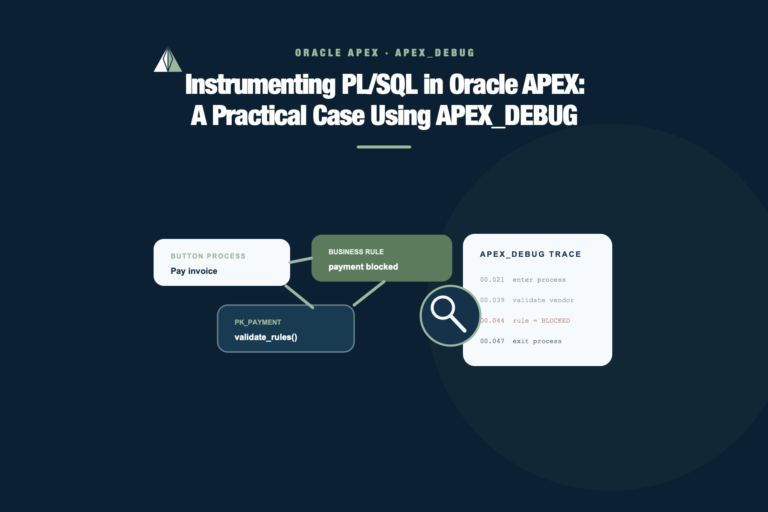
Instrumenting PL/SQL in Oracle APEX: A Practical Case Using APEX_DEBUG
By Dênio Flávio Garcia da Silva There was a moment in my journey with Oracle APEX when I started working on larger enterprise applications and realized that the page itself was often the simplest part of the whole system. The UI looked clean and straightforward, but behind a single button there were packages with hundreds
-

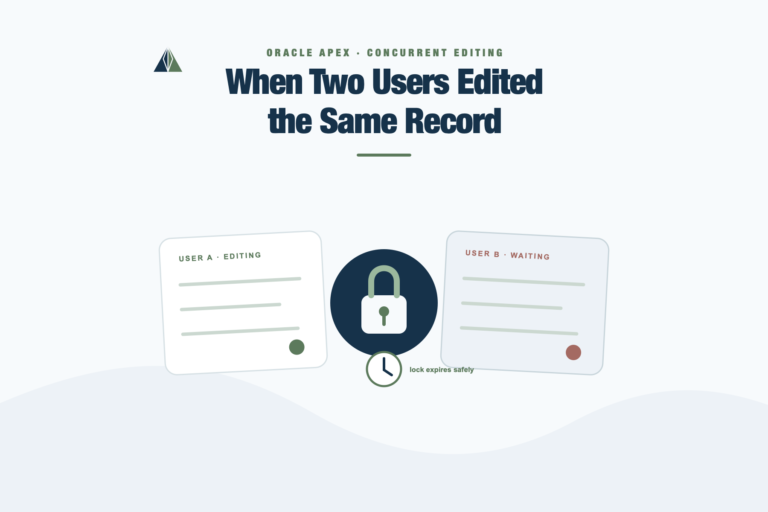
When Two Users Edited the Same Record
By Dênio Flávio Garcia da Silva There are certain problems in enterprise applications that only show up after a system has been in production for a while. They don’t appear during development, they don’t fail loudly, and they don’t generate stack traces. They just quietly corrupt user expectations. One of those problems is concurrent editing.